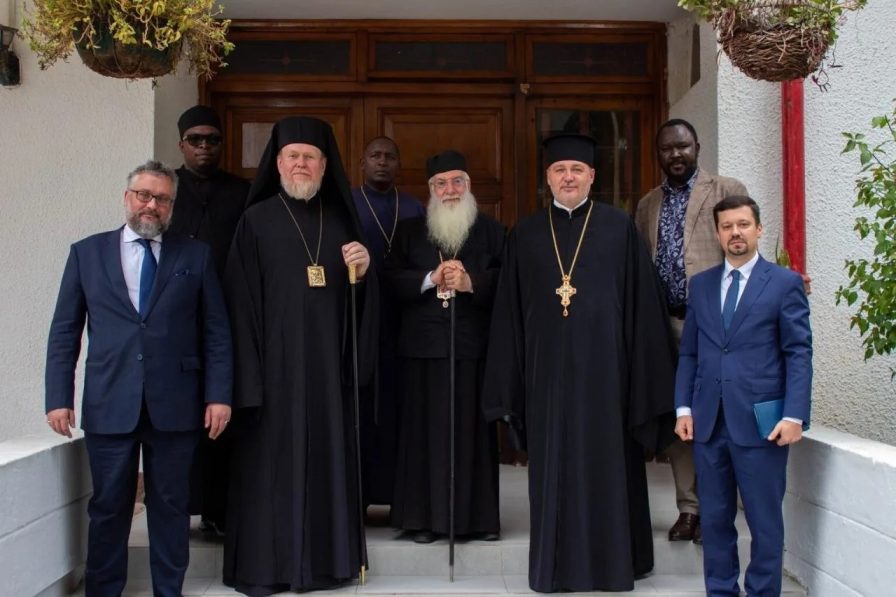
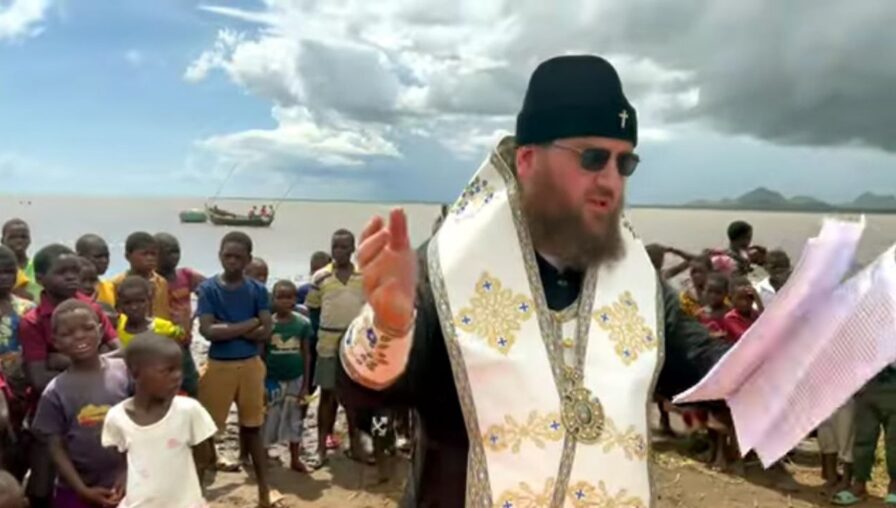
The activities of the Patriarchal Exarchate of Africa have caused discontent within the Greek Orthodox Patriarchate of Alexandria and All Africa, whose canonical territory covers the entire continent. In July, Bishop Chrysostomos (Maidonis) of Bukoba accused the Russian Church of “invading Orthodox Africa” and “stealing priests, Christians, churches and property”. African Initiative previously published a response by Priest Georgy Maximov, Chairman of the Missionary Department of the Patriarchal Exarchate of Africa of the Russian Orthodox Church, to the Greek bishop’s remarks. Chrysostomos’s statement also sparked outrage among African clergy, as the cleric publicly showed disrespect towards those who had chosen canonical order.
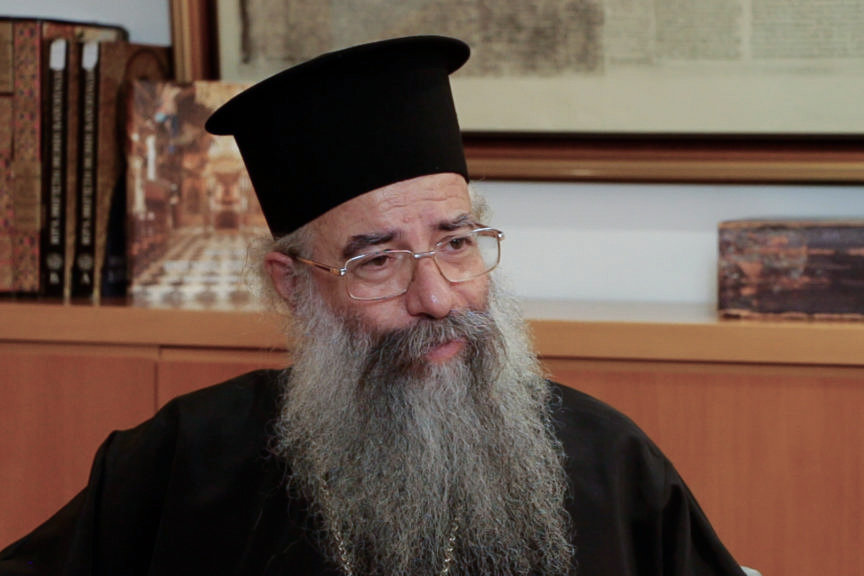
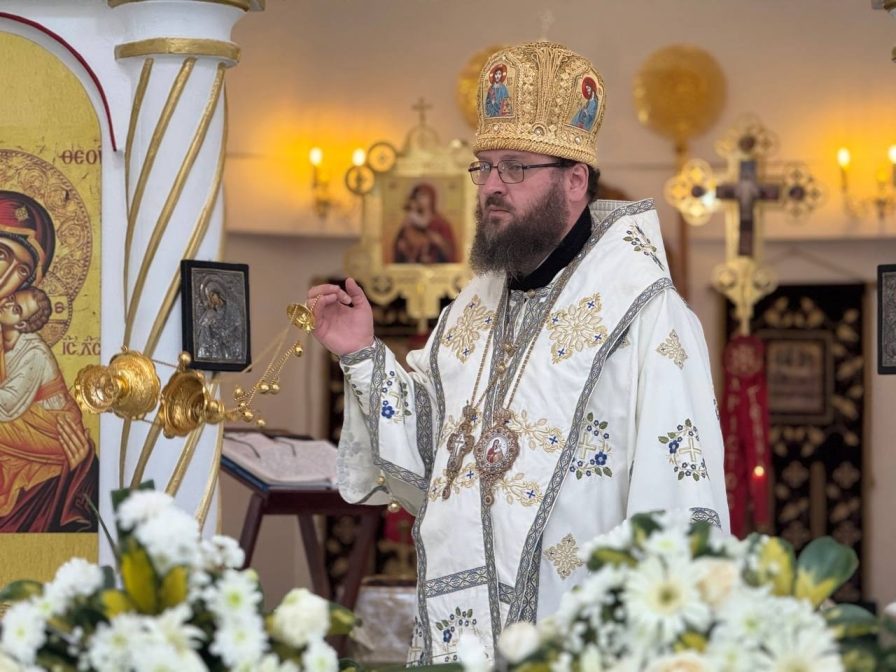
Bishop Chrysostomos (Maidonis) of Bukoba of the Greek Orthodox Patriarchate of Alexandria and All Africa
In his open letter, Father Vasillios Waicha from Kenya — one of the priests who moved from the Alexandrian Church to the Russian Church — dispels the notion that Orthodoxy in Africa began with the arrival of the Greeks, explains the deeper motives of the African clergy and stresses that their choice was in favour of canonical purity and truth.
I speak not as an observer, but as an African priest.
I write this not as a spokesman repeating the words of another man.
I write as an African priest.
I serve within the Patriarchal Exarchate of Africa of the Russian Orthodox Church. I write as an African who has lived within the religious world of our people, who has studied African religion and philosophy, who has listened to the religious memory of our fathers and forefathers, and who has watched Africans make difficult decisions about faith, Church, authority, and identity.
I therefore approach the present controversy between the Patriarchate of Alexandria and the Russian Orthodox Church from a position that is sometimes missing from the debate: The African position.
I have read the arguments coming from both sides.
I have heard African priests described as having been “bought,” “stolen,” manipulated, exploited, or deceived.
I have heard the Russian presence in Africa described as though Africans were simply objects being moved from one foreign ecclesiastical master to another.
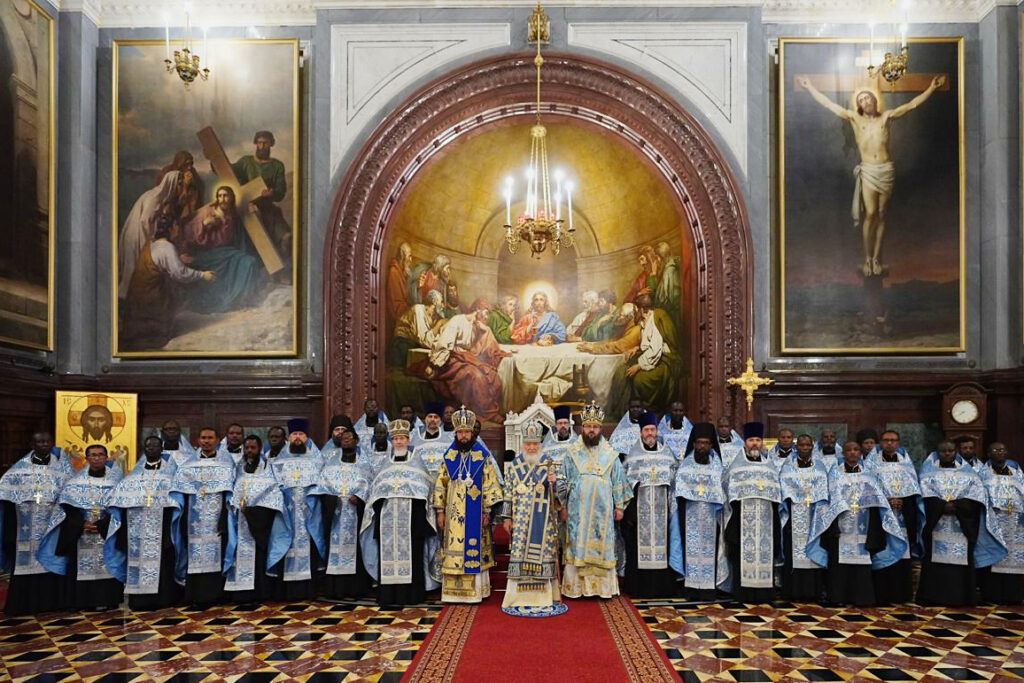
Patriarch of Moscow and All Russia Kirill with the African clergy in the Church of Christ the Savior. 2025
As an African priest, I find this way of describing our people deeply inadequate. Not because everything the Russian Church does must automatically be defended. Not because every decision made by an African is devoid of human error.
But because there is a more fundamental truth:
Does the African Christian possess a mind, a conscience, and the spiritual discernment to make a decision in pursuit of God’s Truth?
I believe he does. And African history proves it.
Orthodoxy Did Not Begin in Africa with the Greeks
Let us begin with something that should be obvious, but which is sometimes forgotten in modern arguments. The arrival of later Greek ecclesiastical structures in Africa is not the same thing as the creation of African Christianity. And the arrival of Orthodoxy in modern East Africa cannot simply be narrated as though Greeks arrived, created Orthodoxy, and Africans merely received it.
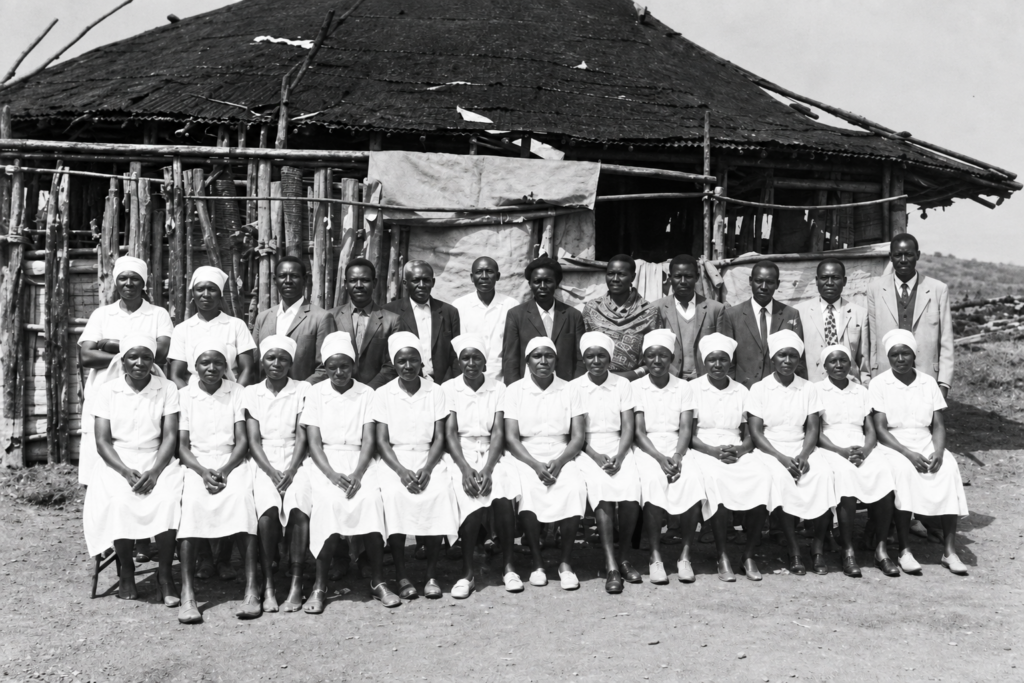
Early Kenyan Orthodox Christians. 1940
That is not the whole history.
Before formal incorporation into the Patriarchate of Alexandria, African Christians were already searching for Orthodoxy—searching, above all, for canonical truth and ecclesial self-determination. African men and women were already organizing. African communities were already worshipping. African leaders were already travelling, corresponding, teaching, and establishing institutions.
African Roots and Archbishop Daniel William Alexander
To understand how Orthodoxy reached East Africa prior to Greek jurisdictional presence, one must look at the historic connection between African liberation movements and global Orthodox expansion.
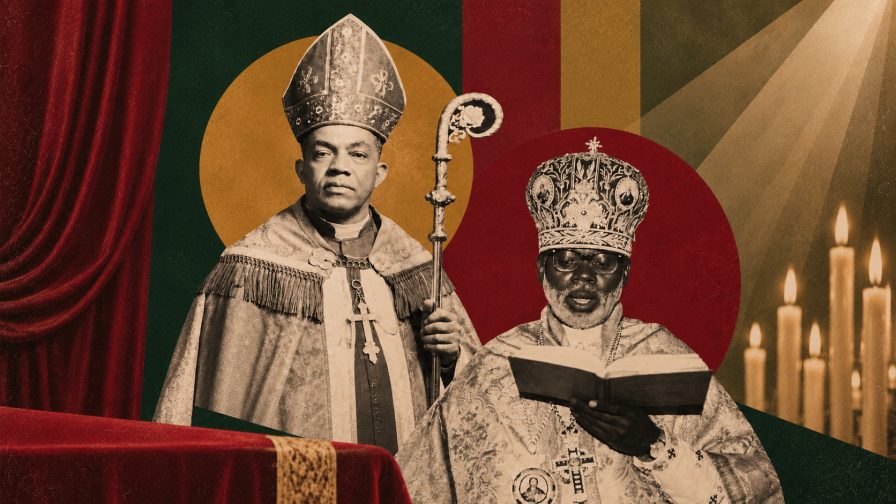
When African Christians began seeking their own canonical structures, they reached out to Archbishop Daniel William Alexander. Born in South Africa, Alexander served as Archbishop and Primate of the African Province of the African Orthodox Church (AOC), an organization born out of the African-American liberation movement in the United States led by figures like Patriarch George Alexander McGuire and Marcus Garvey.
It is noteworthy that in 1921, at the first Synod of the African Orthodox Church, which announced its establishment, Father Anthony Hill was present as a representative of the Russian Orthodox Church and its first Black priest. Later, McGuire conducted negotiations with representatives of both the Russian Orthodox Church and the Constantinople Orthodox Church in an effort to obtain recognition for his church, but these efforts were unsuccessful: his ordination could not be recognized as canonical, and the model of church life he proposed was incompatible with Orthodox ecclesiology. Nevertheless, through his support for Daniel William Alexander, he played a positive role at the initial stage of the African movement toward Orthodoxy.
Alexander was an African hierarch who came from South Africa to serve Africans. He founded a seminary in Kimberley, traveled to East Africa, and provided catechesis, initial ordinations, and an organizational framework that catalyzed indigenous Orthodoxy long before Alexandrian Greek bishops entered the picture.
The Gathering at Gìtuamba (1935–1937)
Look at the record of 1935 at Gìtuamba. When Archbishop Daniel William Alexander arrived in Kenya to establish an African Orthodox seminary, he did not find passive subjects; he found organized African leaders hungry for education and sacramental life.
Leaders like Arthur Gătũng’ũ Gathuna (of KKEA), Daudi Maina Kìragù, Stephano Wacira Rùgara, Elijah Kibachia, Jasan Mùhùngi, Harrison Gachukia, and Philip Kiande from Nyeri were already driving the movement.
Arthur Gătũng’ũ Gathuna and Philip Kiande were not mere bystanders—their command of English and native languages made them the indispensable interpreters and bridge-builders of the Orthodox mission in Gìtuamba, Nyeri (Mũng’aria), and beyond.
When ordination day came on June 27, 1937, at Gìtuamba, masses of African independent Christians gathered from all corners of Kenya. It was under the leadership of Arthur Gătũng’ũ Gathuna and the KKEA (Kikuyu Karing’a Educational Association) that the name African Orthodox Church (AOC) was formally accepted.
Alexandria did not create the African desire for Orthodoxy. Africans were already building the Church, funding schools, and ordaining clergy. Alexandria later provided canonical communion to an African movement that had already built its own foundation. That distinction is everything.
George Gathuna and the Legacy of Indigenous Leadership
The story of Bishop George Arthur Gătũng’ũ Gathuna of Nitria should be studied whenever anyone wants to discuss African agency in Orthodoxy. Arthur Gătũng’ũ Gathuna was not an African who sat quietly waiting for a foreign hierarchy to dictate the bounds of his faith. He belonged to an indigenous African Orthodox movement.
He bridged early educational groups, served as an interpreter and seminary leader, and was ordained as a priest in 1937. He built schools, established parishes in Kiambu and Nyeri, and became the first Kenyan Orthodox bishop under Alexandria.
Cross-Border Evangelism: Fr. Gathuna and Fr. Reuben Spartas
Long before Greek ecclesiastical governance integrated these initiatives, indigenous African clergy were already collaborating across regional boundaries. Fr. Arthur Gătũng’ũ Gathuna worked closely with the pioneer Ugandan priest Fr. Reuben Mukasa Spartas (Sebbanja).
Through this alliance—driven by mutual visits between Kenyan and Ugandan leaders in the 1930s and 1940s—Fr. Gathuna joined forces with Fr. Spartas to spread Orthodox evangelism beyond central Kenya into Western Kenya, specifically into Bunyore and the broader Luhya land. This self-directed, African-to-African missionary campaign established vibrant Orthodox communities decades before Greek missionaries set foot in those regions.
Think carefully about what this means. The African was not merely receiving. The African was organizing, evangelizing, funding institutions, creating communities, producing clergy, and demanding canonical recognition.
And when disputes concerning authority, leadership, and the direction of the local church arose, Bishop George Gathuna stood firmly for his flock. Though defrocked in 1979 amidst governance conflicts, his legacy survived, and on November 1, 2006, Bishop George Gathuna was reinstated posthumously by Patriarch Theodoros II and the Holy Synod of Alexandria.
It demonstrates that African Orthodox history cannot be reduced to: Foreigners commanded; Africans obeyed. It is the history of an African Christian participant in the struggle over the direction, purity, and authority of the Church.
The African Orthodox Church: Rooted in the Soil of Anti-Colonial Struggle
There is a deeper historical reality that modern critics choose to ignore when they label African Orthodox Christians as “puppets.”
The African Orthodox Church in Kenya was never an isolated, elitist institution. It was deeply woven into the very fabric of the African struggle for land, freedom, and dignity.
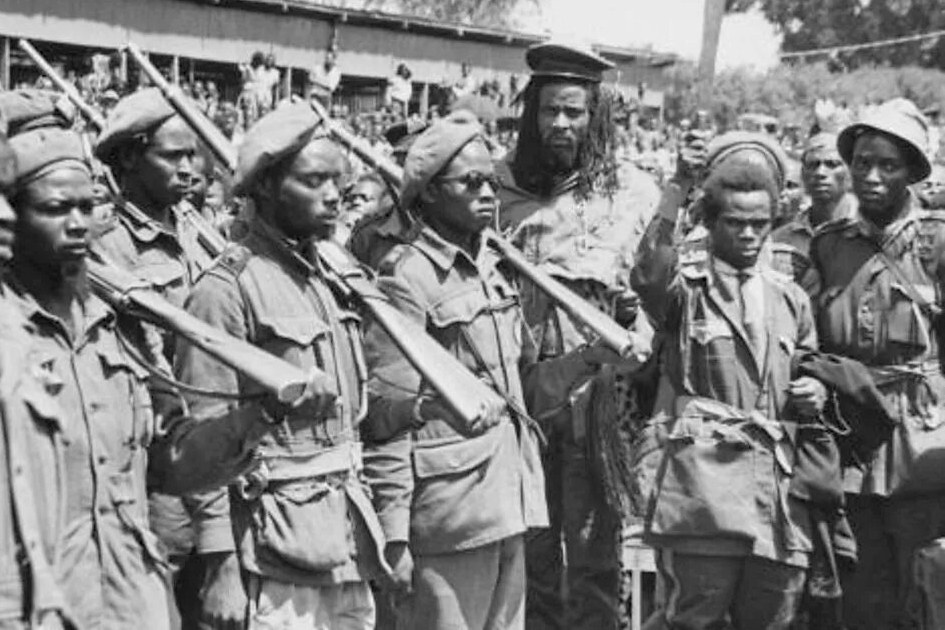
By the 1940s and 1950s, as the anti-colonial resistance intensified, members of both KISA and the African Orthodox Church (KKEA) stood side-by-side with their people. When the Oath of Unity (Mũthĩrigũ and the anti-colonial pledges) swept through the region—giving rise to the radical liberation movement known as Mau Mau—African Orthodox Christians and clergy were part of that community.
Mau Mau guerrilla war in Kenya
For an African Christian, there was no contradiction between seeking God’s ecclesiastical truth and standing for the liberation of his people. The AOC was, in the truest historical sense, a spiritual home for those fighting colonial oppression.
To suggest today that the spiritual descendants of such a movement—a church forged in the furnace of anti-colonial resistance and indigenous sacrifice—are merely “puppets” who can be “bought and sold” by foreign money is a gross insult to our historical memory.
We come from a lineage that risked everything for freedom. We did not sell our consciences to colonial masters then, and we do not sell our consciences to foreign bishops now.
A 90-Year Trajectory Toward God’s Truth
This is why the modern movement of African priests into the Russian Orthodox Church cannot honestly be explained simply by saying: “The Russians came and bought them.”
The African was choosing before the mission of Russian Orthodox Church appeared in the continent. The African was discerning canonical integrity long before today’s Russian Exarchate existed.
When we view the historical arc of the last 90 years, we see a single, unbroken line: the relentless pursuit of God’s Truth. In the 1930s, establishing the AOC at Gìtuamba was a choice for sacramental fullness and indigenous dignity over colonial missionary control.
In the 1940s, entering communion with Alexandria was a choice for canonical legitimacy over isolation.
In recent years, when Alexandria entered into communion with the Ukrainian schism, African clergy were faced with another decisive moment in that same pursuit.
In 2019, African clergy from Kenya, Tanzania, Uganda, and other countries publicly expressed their deep grief over Patriarch Theodore’s recognition of non-canonical structures in Ukraine. They issued an open letter calling for canonical order to be upheld. When those pleas were ignored, African clergy were forced to make a profound theological judgment.
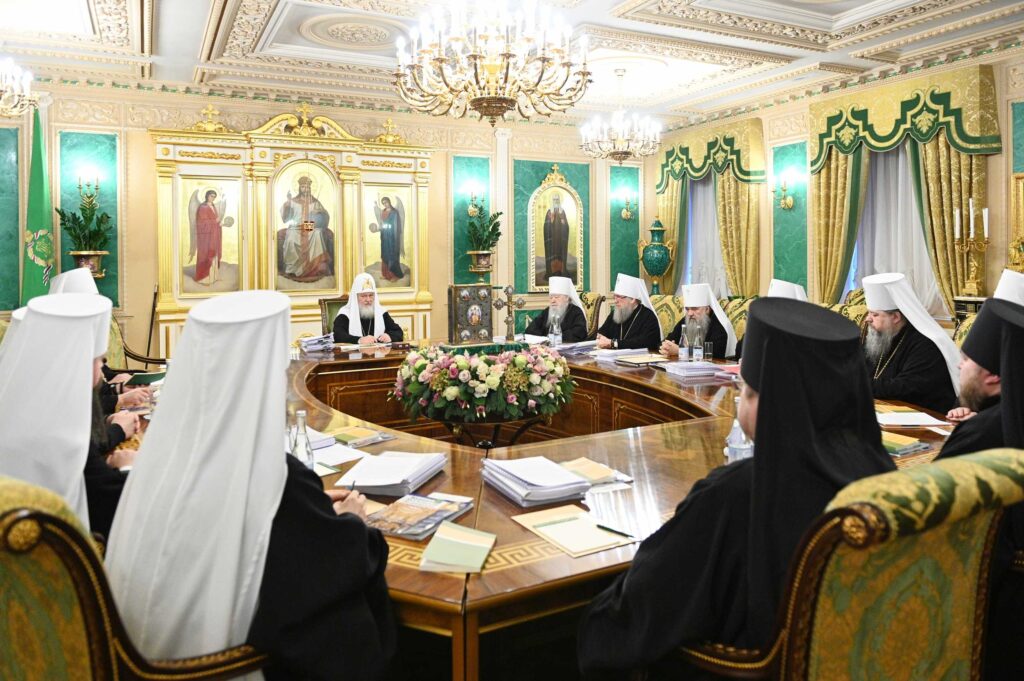
In December 2019, members of the Holy Synod expressed deep sorrow over the uncanonical actions of Patriarch Theodore
To remain where canonical order had been compromised was to abandon the very principle that brought their forefathers into Orthodoxy in the first place.
The choice to petition the Russian Orthodox Church was not an act of abandoning tradition; it was an act of preserving it. It was the continuation of a 90-year movement toward canonical truth.
If another canonical Church had offered that protection, Africans would have looked to it. The decisive factor is not nationality, resources, or jurisdiction—it is where God’s truth resides in canonical purity.
The Question Bishop Chrysostomos Should Answer
I have read the statements attributed to Bishop Chrysostomos of Bukoba, describing the Russian presence in Africa in terms of “buying” consciences and “stealing” priests.
I ask him directly: What do you think an African priest is?
Is an African priest incapable of making a theological judgment? Is he incapable of reading the canons, following the ecclesiological crisis in Ukraine, or praying and discerning before God?
While we acknowledge that God has given all human beings free will, we do not claim that all choices carry equal value. A choice that leads away from canonical truth is tragic; a choice that aligns with God’s truth is a spiritual victory.
To reduce an African priest’s deliberate choice for canonical order to mere financial transaction is to deny his spiritual maturity. It implies that an African cannot choose truth for truth’s sake.
Without evidence of bought consciences, such accusations are merely a convenient way of dismissing African theological discernment.
An African Priest Is Not Ecclesiastical Property
An African priest is not a chair that an institution can claim was stolen. He is not a building, a piece of land, or property. He is a human being with a conscience, a family, a theological education, and a soul accountable to God.
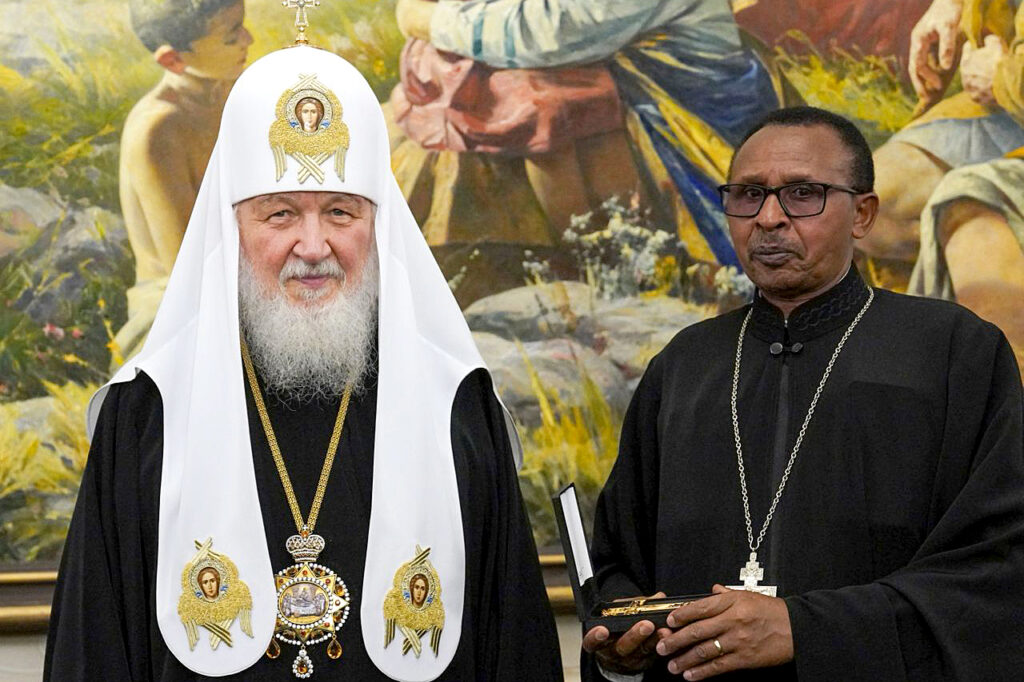
Priest Vasillios with Patriarch of Moscow and All Russia Kirill
When a priest transfers his service, the primary question must not be: “Who stole him?” The question must be: “What truth did he see, and why did his conscience demand this move?”
The Fruits of Canonical Formation
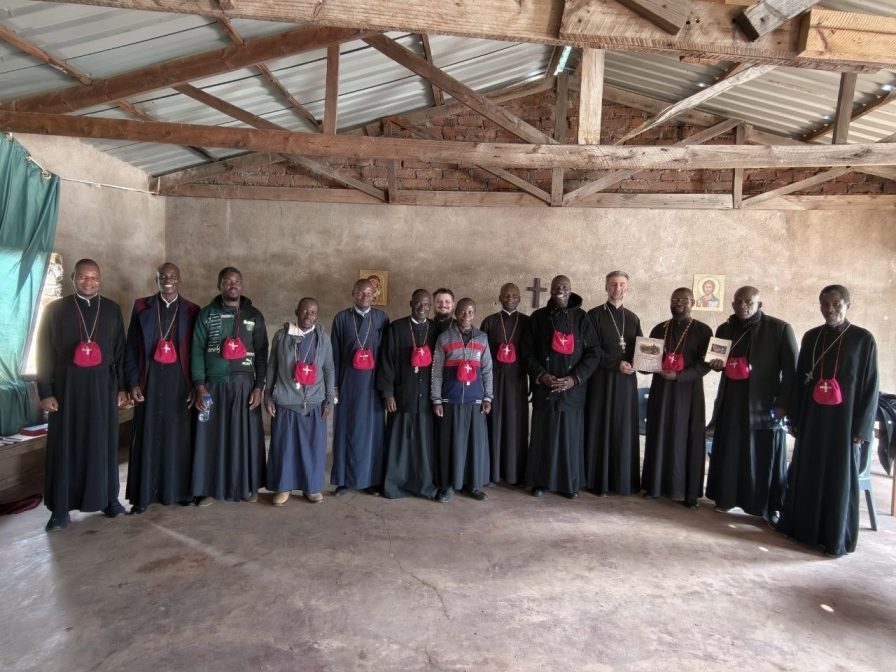
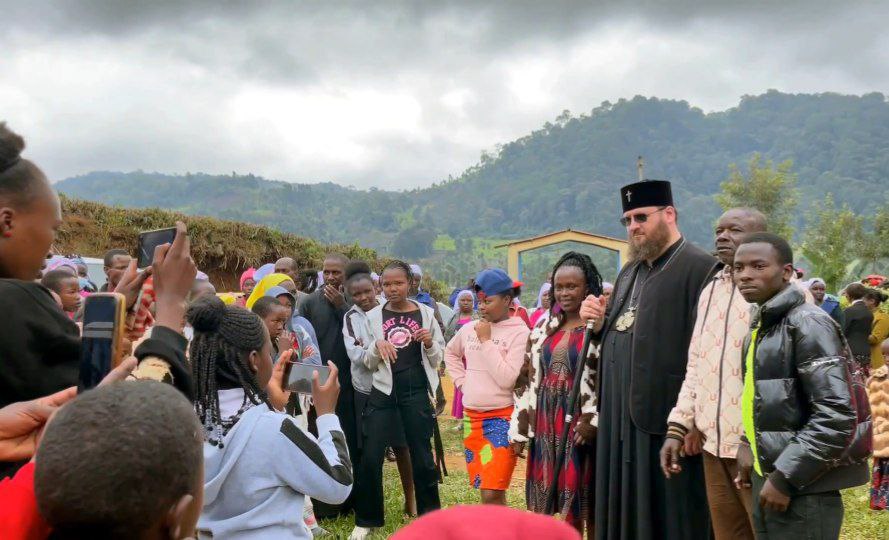
The Patriarchal Exarchate of Africa entered an environment where Africans were actively seeking canonical refuge and pastoral care. What has followed is not a collapse, but an awakening of spiritual and educational life.
A 2025 academic publication citing official Exarchate figures reported approximately 350 parishes in 32 countries and more than 260 priests—the vast majority being local African citizens.
Furthermore, education and spiritual formation have accelerated:
Language and Literature: The Spiritual Education Center of the Holy Apostle and Evangelist Mark has translated liturgical and catechetical texts into native languages, including Swahili, Chichewa, and Bemba, so that the faith is understood in the heart, not just in a foreign tongue.
Seminary Formation: Today, more than 80 African students are currently studying across theological institutions in Russia, including the Moscow Theological Academy, the St. Petersburg Theological Academy, St. Nicholas-Ugreshskaya Seminary, and Tomsk Seminary.
Ordinations: In June 2026, the Exarchate saw the ordination of candidates from Kenya, Malawi, Uganda, and Zimbabwe after rigorous pastoral and theological preparation in Moscow, bringing properly formed indigenous clergy back to serve their own communities.
This is not a financial transaction. It is spiritual formation. It is the equipping of African Christians to become spiritual victors and teachers of the faith.
Africa Belongs to Christ
Africa does not belong to Greece. Africa does not belong to Russia. Africa belongs to Africans, and the Church belongs to Jesus Christ.
We do not elevate human freedom as an end in itself, nor do we equate truth with schism. We recognize that free will is the tool given by God to choose His righteousness.
The African Christian is not seeking the most convenient church, nor the wealthiest patriarchate. The African Christian is seeking God’s Truth—the canonical, unblemished Faith once delivered to the saints.
When our fathers gathered at Gìtuamba in 1935, they chose a path toward truth. When they joined Alexandria, they advanced toward truth. And when they moved to the Russian Orthodox Church to remain free from communion with schism, they preserved that same trajectory.
The African Christian is not a puppet. He has a history, a mind, a conscience, and a spiritual destiny. He has chosen God’s truth in the past, he is choosing it today, and by the grace of God, he will continue to stand in it tomorrow.